
Future with “will” and with “going to”
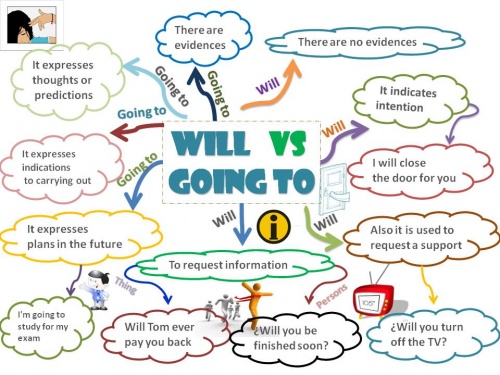
The future simple tense is often called will, because we make the future simple tense with the modal auxiliary will. Despite it there are other kind of futere tense called near future and is made with "going to", when are going to do something and you are sure you are going to do it.
How do we make the Future Simple Tense?
The structure of the future simple tense is:
| subject | + | auxiliary verb WILL | + | main verb |
| invariable | base | |||
| will | V1 | |||
For negative sentences in the future simple tense, we insert not between the auxiliary verb and main verb. For question sentences, we exchange the subject and auxiliary verb. Look at these example sentences with the future simple tense:
| subject | auxiliary verb | main verb | |||
| + | I | will | open | the door. | |
| + | You | will | finish | before me. | |
| - | She | will | not | be | at school tomorrow. |
| - | We | will | not | leave | yet. |
| ? | Will | you | arrive | on time? | |
| ? | Will | they | want | dinner? |
When we use the future simple tense in speaking, we often contract the subject and auxiliary verb:
| I will | I'll |
| you will | you'll |
| he will she will it will |
he'll she'll it'll |
| we will | we'll |
| they will | they'll |
For negative sentences in the future simple tense, we contract with won't, like this:
| I will not | I won't |
| you will not | you won't |
| he will not she will not it will not |
he won't she won't it won't |
| we will not | we won't |
| they will not | they won't |
The auxiliary verb going to is used in talking about intentions. (An intention is a plan for the future that you have already thought about.)
- We're going to buy a new car next month.
- I'm going to work in a bank when I leave school.
- In the new year I'm going to stop eating so much junk.
- He's not going to go to the dance. He's got too much work.
- I'm not going to watch TV until my science project is finished.
- Are you going to play basketball after school?
- What are you going to have for lunch today?